Tank planning tool
Know the real working volume of your aquarium.
Calculate water volume, estimated filled weight, filtration flow, and water-change amounts, then compare common tank footprints.
A healthy fish starts with a prepared home
Learn the system. Understand the fish.
Use this hub to build a stable aquarium, prepare for a new arrival, create a repeatable care routine, recognize warning signs, and understand the long-term needs of each species we raise.
New aquarium roadmap
Build the life-support system before choosing the fish.
An aquarium is a managed ecosystem. Start with the adult fish’s needs, then size the aquarium, filtration, heating, oxygenation, cover, and maintenance routine around that animal—not around its size on purchase day.
Research the adult
Confirm adult size, lifespan, behavior, diet, water range, social needs, and whether the fish may eat or injure proposed tankmates.
Choose the footprint
Gallons matter, but swimming length, turning room, bottom area, territories, and access for maintenance matter too.
Build the system
Install appropriately sized filtration, heat, aeration, a secure cover, safe décor, and a stand and floor capable of supporting the filled aquarium.
Condition the water
Treat tap water for chlorine or chloramine as required, establish the species-appropriate temperature and chemistry, and verify heater accuracy.
Cycle without livestock
Establish biological filtration and confirm it can process nitrogen waste before a fish is asked to live in the aquarium.
Add slowly and observe
Quarantine new livestock, avoid sudden stocking increases, test after changes, and keep notes so you recognize the aquarium’s normal pattern.
The nitrogen cycle
The filter supports living bacteria—not just clear water.
Fish waste and decomposing food create ammonia. Beneficial microorganisms convert ammonia to nitrite and then nitrate. Ammonia and nitrite should remain undetectable in an established aquarium; nitrate trends help guide stocking, feeding, plant growth, and water changes.
Ammonia→First bacterial step
Nitrite→Second bacterial step
Nitrate
Filtration
Provide mechanical waste capture and enough established biological media for the aquarium’s actual livestock load.
Heat and circulation
Use reliable, guarded equipment appropriate to the volume. Confirm temperature independently and eliminate stagnant areas.
Testing supplies
Keep tests appropriate to your water and fish, including ammonia, nitrite, nitrate, pH, and any relevant hardness or alkalinity tests.
Backup equipment
Keep water conditioner, clean buckets, a spare-heater plan, battery aeration, nets, and a safe temporary container.
Before the box arrives
Make arrival day the easiest day.
The aquarium—not the shipping bag—should be ready to support the fish. Read the individual listing and our shipping instructions before the scheduled delivery.
Cycle and test
Have a fully functioning biofilter. Confirm ammonia and nitrite are undetectable and that temperature and pH are stable before the fish arrives.
Prepare quarantine
Use a separate cycled aquarium with its own net, siphon, heater, cover, and filter. A minimum 30-day quarantine is a widely recommended starting point.
Match the listing
Confirm adult tank size, temperature range, water chemistry, diet, aggression, and whether the fish is exact-fish or group-selected.
Clear your schedule
Bring the package inside immediately, inspect it before opening, keep lights low, and follow the included acclimation directions rather than improvising.
The foundation
Stable, clean water beats constant adjustment.
Keep a written baseline for the aquarium. Test more often after adding fish, changing filtration, treating illness, or whenever behavior changes.
Water-change habits
- Base frequency and volume on test results, stocking, feeding, and filter capacity.
- Condition replacement water and bring it close to the aquarium temperature.
- Siphon trapped waste without stripping every surface clean at once.
- Never use soap or household cleaners on aquarium equipment.
Protect the biofilter
- Do not replace all biological media at the same time.
- Rinse reusable media gently in removed aquarium water when practical.
- Expect closer monitoring after medication, a power outage, deep cleaning, or filter disruption.
- Adding water for evaporation does not replace a water change.
A repeatable rhythm
Small observations prevent large problems.
Every day
Observe before feeding
- Count fish and check swimming, breathing, posture, color, fins, eyes, and appetite.
- Confirm the heater, filter, and aeration are operating.
- Look for aggression, hiding, injuries, or a fish being excluded from food.
Every week
Test, clean, and record
- Test the parameters appropriate to your aquarium and compare with its normal baseline.
- Perform the needed partial water change and remove debris.
- Clean viewing panes and inspect intakes, lids, cords, and seals.
Every month
Inspect the system
- Service mechanical filtration without destroying biological media.
- Check flow, air delivery, heater accuracy, and backup equipment.
- Review growth, body condition, stocking pressure, and whether the aquarium still fits the adult fish.
Nutrition without excess
Feed the species—not the marketing label.
Use a quality staple formulated for the fish’s feeding strategy, then add appropriate variety. Uneaten food becomes a water-quality problem.
Helpful habits
- Offer portions the fish can consume without food accumulating in the aquarium.
- Make sure shy, bottom-dwelling, and lower-ranking fish actually receive food.
- Store dry food sealed, cool, and dry; replace stale food.
- Adjust quantity as fish grow and as temperature, activity, or breeding condition changes.
Avoid shortcuts
- Do not assume algae alone will feed a Bushynose Pleco.
- Avoid mammal meat and unquarantined feeder fish for cichlids.
- Do not add extra food because a fish begs at the glass.
- Do not medicate food or water “just in case” without a diagnosis and a safe plan.
Know what normal looks like
Respond to changes early.
Loss of appetite, hiding, flashing, clamped or damaged fins, unusual spots or mucus, swelling, weight loss, rapid breathing, surface gasping, or abnormal swimming deserve prompt attention.
When something changes
Use evidence before reaching for medication.
Many illness-like signs begin with water quality, oxygen, temperature, aggression, or nutrition. Stabilize immediate hazards, document what changed, and avoid combining treatments without a diagnosis.
Observe quietly
Check breathing, swimming, posture, appetite, color, injuries, feces, and whether one fish or several are affected.
Test the environment
Record temperature, ammonia, nitrite, nitrate, pH, oxygenation and flow, plus recent water, filter, décor, food, or livestock changes.
Separate safely
Move a fish only when isolation is appropriate and the receiving aquarium is stable. Use separate nets, siphons, buckets, and other equipment.
Seek qualified help
Provide photos, video, water results, timeline, stocking list, appetite, and all products already used to an aquatic veterinarian or fish-health professional.
Explore by species
Meet the fish before choosing the fish
Search common freshwater fish by adult aquarium size, temperament, experience level, and fish group. Every guide explains the complete adult commitment, not just the juvenile you may see in a store.
Species-specific priorities
Four fish, four different long-term plans.
These highlights supplement—not replace—the complete guide and the details on each individual listing.
Solo centerpiece cichlid
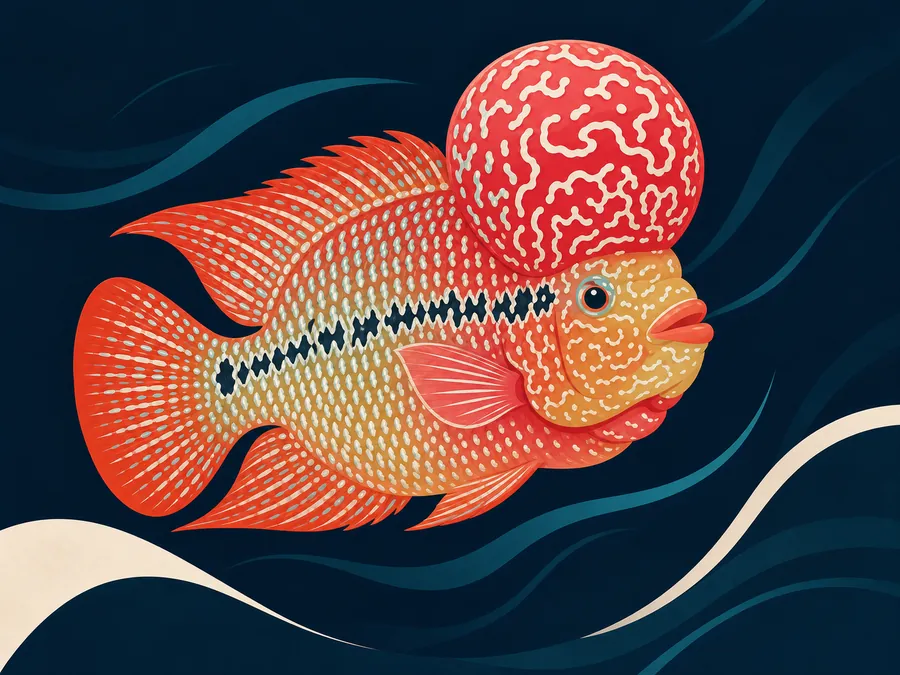
Super Red Dragon Flowerhorn
- Plan on at least 75 gallons for one adult; 90+ gallons gives large males better turning room and water stability.
- House alone unless you are an experienced keeper with a very large divided setup and immediate separation plan.
- Use powerful filtration, a secure lid, protected equipment, and simple décor without sharp edges.
- Feed a quality cichlid staple in controlled portions; monitor weight and waste production.
- Watch for escalating aggression, rubbing injuries, appetite changes, and declining water quality.
Community-friendly bottom dweller
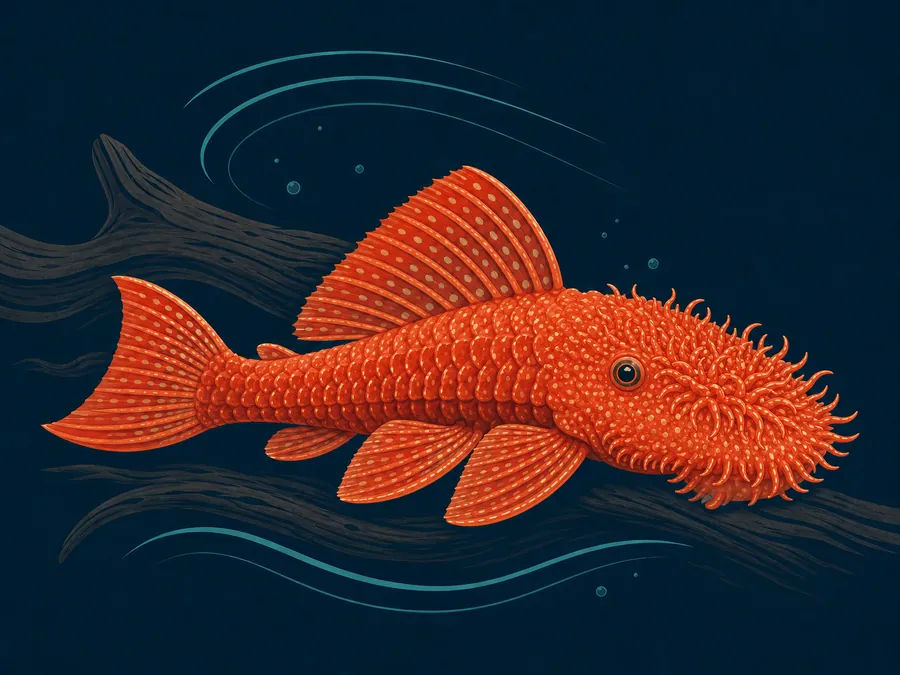
Super Red Bushynose Pleco
- Provide at least 20 gallons for one adult; choose 30+ gallons when sharing a community aquarium.
- Offer caves, shaded resting areas, grazing surfaces, good oxygenation, and enough bottom territory.
- Use sinking vegetable-forward foods plus appropriate variety; algae and leftovers are not a complete diet.
- Feed after lights dim if tankmates take the pleco’s food, and remove uneaten vegetables before they spoil.
- Monitor belly condition and feces; adult males may defend preferred caves.
South American sand-sifting cichlid
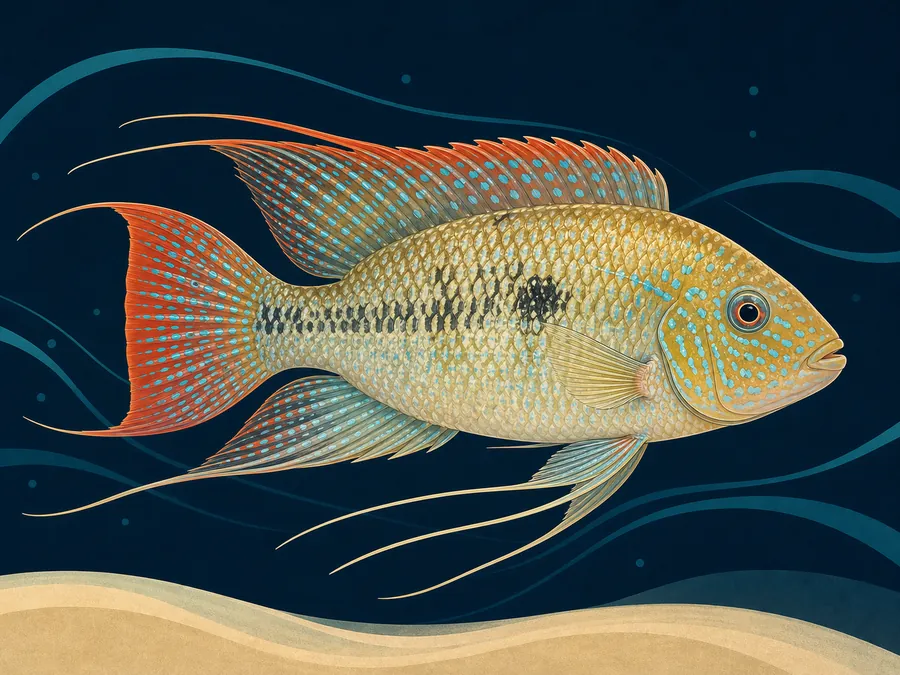
Threadfin Acara
- A 75-gallon aquarium is a practical adult starting point; larger is needed for pairs, groups, or communities.
- Provide fine sand, open swimming room, wood or visual cover, and protected areas away from constant traffic.
- Choose similarly sized, non-aggressive tankmates; avoid fin-nippers and fish small enough to be swallowed.
- Offer varied quality foods that reach the lower water column without accumulating in the substrate.
- Expect digging and increased territorial behavior as fish mature or breed.
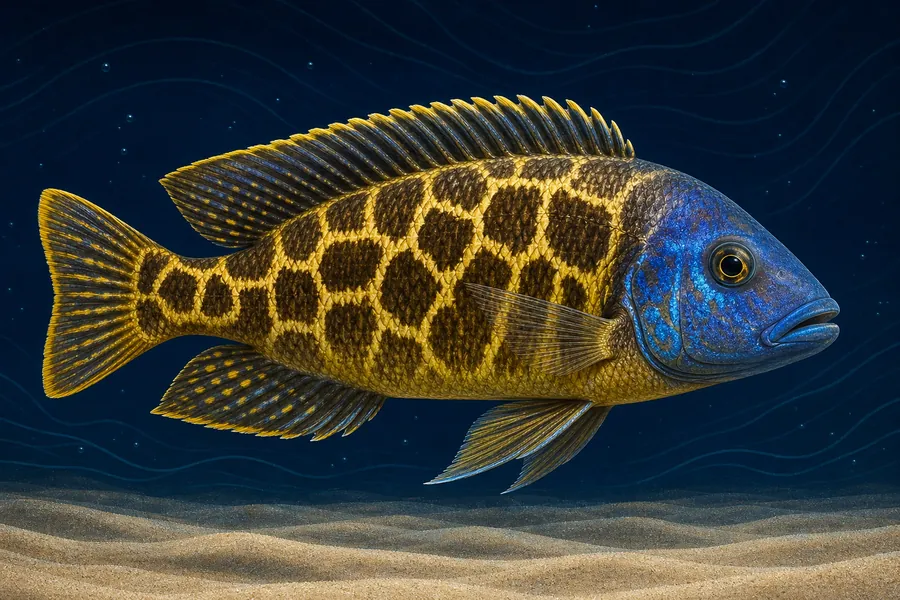
Large predatory Malawi cichlid
Giraffe Cichlid
- Plan around a mature fish: 125 gallons or larger is the responsible starting point for long-term adult housing.
- Maintain stable, hard alkaline water with strong filtration, high oxygenation, open sand, and securely placed rockwork.
- Keep only with robust, similarly sized Malawi fish selected for compatible behavior; small fish may be treated as prey.
- Feed a quality Malawi/hap cichlid diet in controlled portions; avoid mammal meat and risky feeder fish.
- Have a separation plan—adult males can become intensely territorial, especially during breeding.
Protect people too
- Wash hands after touching aquarium water, equipment, food, or fish.
- Wear gloves when you have cuts or wounds and when cleaning aquariums.
- Use a utility sink, bathtub, or outdoor disposal area rather than a food-preparation sink when practical, then clean the area.
- Closely supervise young children around aquariums, electricity, chemicals, and fish food.
Prevent cross-contamination
- Keep dedicated quarantine equipment and work with established aquariums before quarantine systems.
- Do not share wet nets, siphons, décor, media, or water between systems without an appropriate cleaning and disinfection plan.
- Avoid adding shipping or store water to an established aquarium.
Plan for the fish’s full life
- Arrange responsible care before vacations and equipment outages.
- Rehome through an experienced keeper, aquarium society, retailer, or rescue if circumstances change.
- Never release aquarium fish, plants, snails, or aquarium water into natural waterways.
Plain-language reference
Fishkeeping terms worth knowing
Biological filtration
Living microorganisms, usually concentrated in filter media and other oxygenated surfaces, that process toxic nitrogen waste.
Cycled aquarium
An aquarium with established biological filtration that can process the expected ammonia load without detectable ammonia or nitrite accumulation.
Conditioned water
Replacement water treated as needed to neutralize chlorine or chloramine and prepared close to the aquarium’s temperature and required chemistry.
Quarantine
Keeping new or sick fish in a separate, stable system with dedicated equipment for observation and, when necessary, treatment.
General hardness (GH)
A measure largely associated with dissolved calcium and magnesium. Species differ in their preferred range.
Carbonate hardness (KH)
A measure related to buffering capacity—the water’s resistance to rapid pH change.
Working water volume
The water actually present after accounting for substrate, décor, air space, and equipment displacement; often less than the aquarium’s label.
Bio-load
The combined waste and oxygen demand created by the aquarium’s livestock, feeding, and decomposing organic material.
Plan before you need it
Power outages, vacations, and equipment failures happen.
Keep a battery air pump, spare heater appropriate to the aquarium, water conditioner, test supplies, clean buckets, and a written feeding/emergency plan. A trained caretaker should know where shutoffs are and who to contact—but should not improvise medication or overfeed.
Care information and limitations
Individual fish, breeding lines, aquariums, and local water differ. Listing-specific guidance takes priority, and serious health concerns require a qualified aquatic veterinarian. Our general husbandry approach is informed by the Merck Veterinary Manual’s aquarium-fish guidance, routine fish health guidance, , University of Florida responsible aquarium ownership guidance, and the CDC’s fish and aquarium hygiene guidance.