
Freshwater Freaks species guide
Bronze and Albino Cory Care Guide
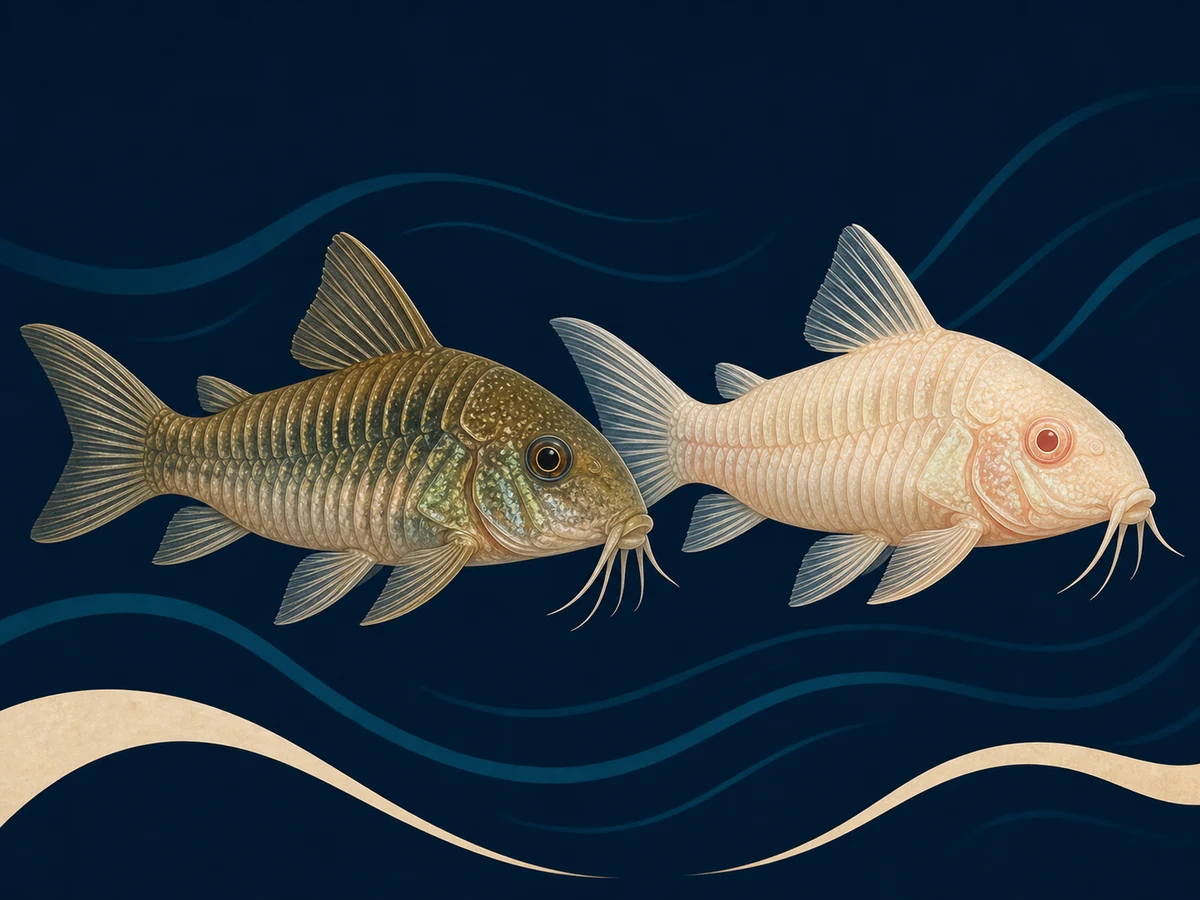
Osteogaster aenea (often sold as Corydoras aeneus) · Callichthyid catfish
Bronze and albino corys are social bottom-dwelling catfish. They search for food but are not cleanup tools and must receive a complete sinking diet.
Adult size2.5–3 in
Adult aquarium20 long or larger
Temperature72–79°F
TemperamentPeaceful bottom dweller
ExperienceBeginner
Social needGroup of 6+ of the same type
A good match when
Your aquarium meets the adult commitment
Bronze and albino corys are social bottom-dwelling catfish. They search for food but are not cleanup tools and must receive a complete sinking diet.
- Temperature
- 72–79°F
- pH guidance
- 6.0–8.0
- Social structure
- Group of 6+ of the same type
The adult home
Build around behavior, not just gallons
- Use smooth sand or fine rounded substrate that will not damage barbels.
- Keep an open bottom area plus shaded shelters and a clear path to the surface.
- Provide gentle-to-moderate flow and good oxygenation.
Water stability comes first
A listed range is not a target to chase with quick chemical adjustments. Match your source or breeder water gradually, understand GH and KH, use a reliable test kit, and prioritize consistent clean water.
Compatibility and nutrition
Make sure every fish can behave and eat normally
- Pair with peaceful fish that will not outcompete them at feeding time.
- Keep at least six compatible corys of the same species or form.
- Deliver sinking wafers, pellets, and varied frozen foods directly to the group.
Compatibility lists are never guarantees. Observe the actual animals, provide visual barriers, and keep a safe alternate housing plan whenever territorial or predatory fish are involved.
Arrival and long-term care
Observe first; change conditions deliberately
- Before arrival, cycle and test the aquarium, confirm temperature, and prepare a lid and species-appropriate cover.
- On arrival, dim the lights, inspect the unopened bag, and follow the seller’s acclimation directions. Do not pour shipping water into the aquarium.
- For the first week, keep the environment quiet, feed lightly after the fish settles, and record appetite, breathing, waste, and social behavior.
- Check that every cory has a rounded belly and intact barbels.
- Remove trapped waste from the substrate without sterilizing it.
- Occasional surface dashes are normal; repeated distressed gulping warrants water-quality and oxygen checks.
When to seek experienced help
Test temperature, ammonia, nitrite, nitrate, and pH first. Seek an aquatic veterinarian or experienced fish-health professional for persistent breathing distress, loss of balance, rapid swelling, ulcers, severe injury, abnormal waste with ongoing weight loss, or sustained refusal to eat. Avoid medicating blindly.
Breeding overview
Breeding creates a responsibility for the offspring
Conditioned adults often spawn after a cool water change, placing adhesive eggs on glass or décor. Eggs can be moved to a protected, gently aerated container; fry need tiny sinking foods.
Before attempting a spawn, prepare cycled grow-out space, suitable first foods, a separation plan, and responsible homes for juveniles. Do not rely on a community aquarium to provide safe or controlled breeding conditions.
Quick answers
Bronze and Albino Cory FAQ
Is this fish suitable for a beginner?
Beginner is our practical experience rating. A fully cycled aquarium, correct adult space, and compatible water are required at every level.
Can it live in a community aquarium?
Peaceful bottom dweller. Compatibility depends on adult size, individual behavior, group structure, aquarium footprint, and whether every species shares compatible water requirements.
Is the minimum aquarium a stocking recommendation?
No. It is a responsible adult starting point for the species under an appropriate setup. Additional fish, territories, or mixed species can require substantially more room.
Editorial approach and sources
This educational guide uses conservative adult-care recommendations synthesized from established aquarium husbandry practice, taxonomic references, veterinary-reviewed fish-care material, and species biology. Aquarium size is a responsible starting point rather than a stocking guarantee. Last reviewed August 2, 2026.