
Freshwater Freaks species guide
Oscar Care Guide
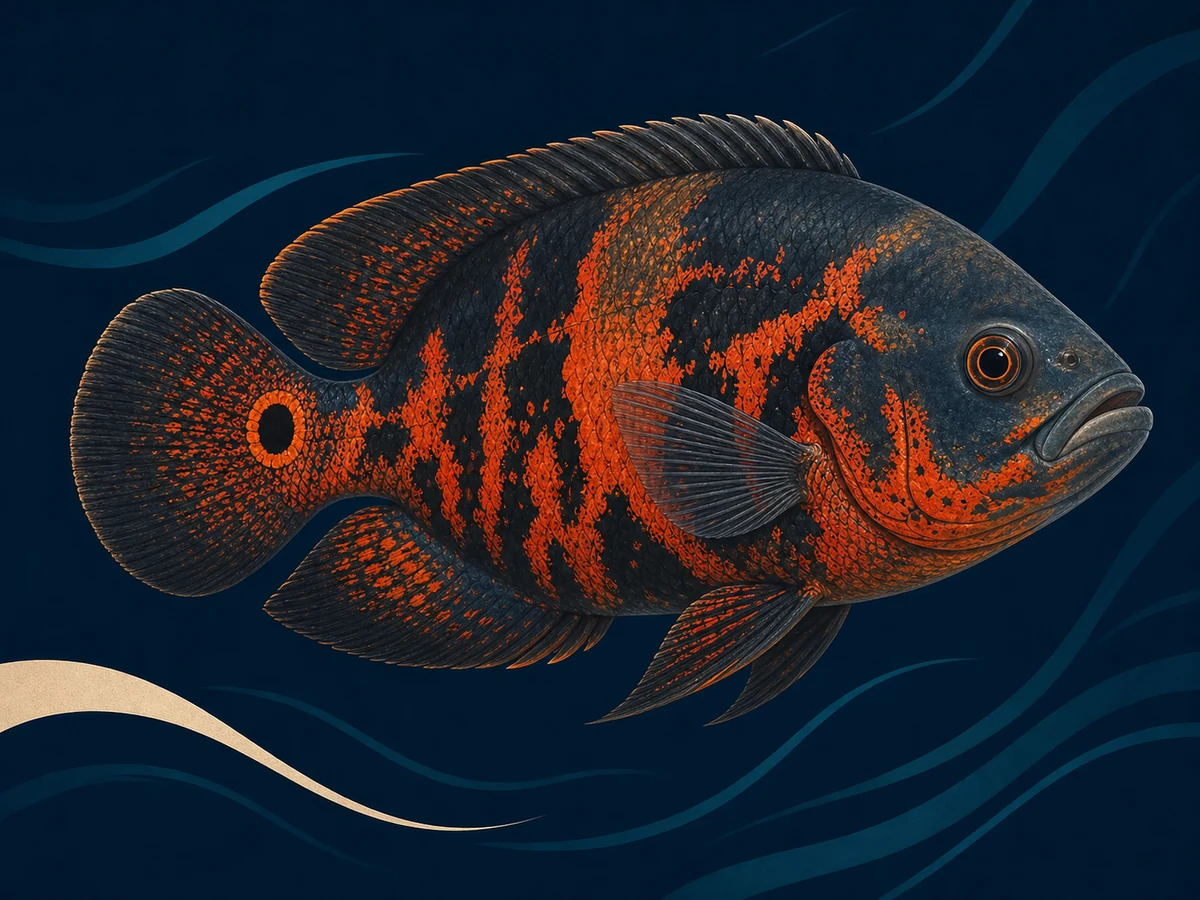
Astronotus ocellatus · Large South American cichlid
Oscars are powerful, intelligent cichlids that rapidly outgrow small aquariums. A single adult needs a large footprint, heavy filtration, secure equipment, and a long-term waste-management plan.
Adult size12–14+ in
Adult aquarium75+ gal single; larger for companions
Temperature74–81°F
TemperamentPredatory and territorial
ExperienceIntermediate–advanced
Social needUsually single or carefully paired
A good match when
Your aquarium meets the adult commitment
Oscars are powerful, intelligent cichlids that rapidly outgrow small aquariums. A single adult needs a large footprint, heavy filtration, secure equipment, and a long-term waste-management plan.
- Temperature
- 74–81°F
- pH guidance
- 6.0–8.0
- Social structure
- Usually single or carefully paired
The adult home
Build around behavior, not just gallons
- Use a strong, covered aquarium with substantial biological filtration and easy service access.
- Secure heaters, intakes, lids, and décor; adults move objects and can damage equipment.
- Provide turning room and sturdy visual structure without cluttering the footprint.
Water stability comes first
A listed range is not a target to chase with quick chemical adjustments. Match your source or breeder water gradually, understand GH and KH, use a reliable test kit, and prioritize consistent clean water.
Compatibility and nutrition
Make sure every fish can behave and eat normally
- Many oscars are best kept alone. Any companion must be large, robust, compatible, and supported by much more water volume.
- Small fish are prey; combining large cichlids can lead to serious injury.
- Use a complete large-cichlid pellet as the staple; avoid feeder fish and mammal meat.
Compatibility lists are never guarantees. Observe the actual animals, provide visual barriers, and keep a safe alternate housing plan whenever territorial or predatory fish are involved.
Arrival and long-term care
Observe first; change conditions deliberately
- Before arrival, cycle and test the aquarium, confirm temperature, and prepare a lid and species-appropriate cover.
- On arrival, dim the lights, inspect the unopened bag, and follow the seller’s acclimation directions. Do not pour shipping water into the aquarium.
- For the first week, keep the environment quiet, feed lightly after the fish settles, and record appetite, breathing, waste, and social behavior.
- Measure nitrate and service filters frequently enough for the animal’s heavy waste load.
- Watch appetite, breathing, head and lateral-line condition, and injuries.
- Use safe handling containers; large fish can jump and thrash.
When to seek experienced help
Test temperature, ammonia, nitrite, nitrate, and pH first. Seek an aquatic veterinarian or experienced fish-health professional for persistent breathing distress, loss of balance, rapid swelling, ulcers, severe injury, abnormal waste with ongoing weight loss, or sustained refusal to eat. Avoid medicating blindly.
Breeding overview
Breeding creates a responsibility for the offspring
Sexing is unreliable without spawning or examination. Compatible pairs clean a surface and guard eggs aggressively; breeding requires very large quarters and a plan for many fast-growing juveniles.
Before attempting a spawn, prepare cycled grow-out space, suitable first foods, a separation plan, and responsible homes for juveniles. Do not rely on a community aquarium to provide safe or controlled breeding conditions.
Quick answers
Oscar FAQ
Is this fish suitable for a beginner?
Intermediate–advanced is our practical experience rating. A fully cycled aquarium, correct adult space, and compatible water are required at every level.
Can it live in a community aquarium?
Predatory and territorial. Compatibility depends on adult size, individual behavior, group structure, aquarium footprint, and whether every species shares compatible water requirements.
Is the minimum aquarium a stocking recommendation?
No. It is a responsible adult starting point for the species under an appropriate setup. Additional fish, territories, or mixed species can require substantially more room.
Editorial approach and sources
This educational guide uses conservative adult-care recommendations synthesized from established aquarium husbandry practice, taxonomic references, veterinary-reviewed fish-care material, and species biology. Aquarium size is a responsible starting point rather than a stocking guarantee. Last reviewed August 2, 2026.